
About Us
We combine decades of courtroom experience with a client-first approach to deliver clear, effective legal solutions.
Please fill out the form below and we will get back to you as soon as possible.
We combine decades of courtroom experience with a client-first approach to deliver clear, effective legal solutions.
A franchise royalty cheque bounced three weeks ago and the money still has not come in. That is a cash-flow problem first and a legal problem second, and the two need separate answers. If you run a small franchise chain in India, the statutory clock starts from the bank's return memo: thirty days to serve a demand notice, fifteen days for the franchisee to pay, then one month to file the complaint. Everything after that depends on documents you either hold or do not. The Negotiable Instruments Act, 1881 is generous to a payee, but only when the fundamentals are in order.
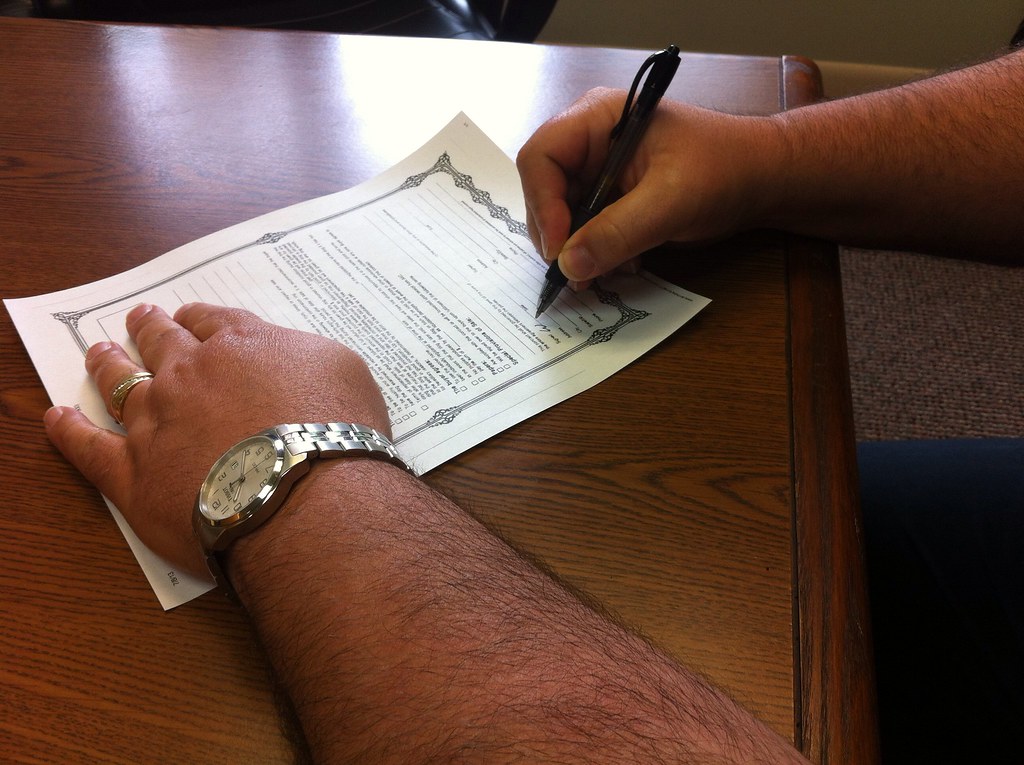
Section 138 of the Negotiable Instruments Act, 1881 applies where a cheque is drawn "for the discharge, in whole or in part, of any debt or other liability". The Explanation to the section narrows that phrase: the debt must be legally enforceable. Royalty becomes enforceable when your franchise agreement makes it payable on a defined event, and that event has actually occurred.
Most agreements define the event in one of four ways: a flat monthly fee, a percentage of reported net sales, a minimum guaranteed monthly amount, or a contribution to a marketing fund. Each produces a different quality of evidence. A flat fee needs only the agreement and an invoice. A percentage of sales needs the franchisee's own sales reports, GST returns where you can obtain them, and your ledger. A minimum guarantee needs a reconciliation showing that reported sales fell short.
The cheque was presented within three months of its date, or within its validity, whichever is earlier.
The drawee bank returned it unpaid, and the memo records insufficiency of funds or that the amount exceeds the arrangement.
You gave a written demand for the cheque amount within 30 days of receiving that memo.
The drawer did not pay within 15 days of receiving your notice.
The complaint was filed within one month of the cause of action under Section 142(1)(b); the court may condone delay for sufficient cause.
Conviction can bring imprisonment up to two years, or a fine up to twice the cheque amount, or both. Two provisions make the route commercially useful rather than merely punitive. Section 143A allows interim compensation of up to 20% of the cheque amount during trial, and Section 148 requires a drawer appealing a conviction to deposit at least 20% of the fine or compensation awarded. Offences are compoundable under Section 147, which is where the bulk of these matters end once pressure is applied.
The statute asks for notice to "the drawer of the cheque". Get the identity of the drawer wrong and you will spend two years arguing about service instead of about royalty.
Address the notice to the company at its registered office as recorded with the Ministry of Corporate Affairs, with a copy to the authorised signatory and the managing director. Section 141 makes the company, and every person who was in charge of and responsible to the company for the conduct of its business at the time of the offence, liable. The Supreme Court has held that a complaint against directors alone, without arraigning the company, is not maintainable (Aneeta Hada v. Godfather Travels & Tours (P) Ltd., (2012) 5 SCC 661). Name the company as accused number one and then the officers in charge.
Many single-outlet franchisees operate as proprietorships or partnership firms. For a proprietorship, address the notice to the proprietor by name, with the trade name in brackets. For a firm, the Explanation to Section 141 treats the firm as a company and a partner as a director, so serve the firm and each partner, and confirm who signed the cheque.
Every dishonoured cheque is a separate offence with its own timeline. A single notice that lists each cheque number, date, amount and return memo is efficient and is valid for all of them, provided it is issued within 30 days of the earliest memo as well. Annex the memos. Do not describe the demand loosely; ask for the exact amount of the cheques, and keep any interest or penalty claim for the civil suit.
Section 139 presumes that a cheque was received for the discharge of a debt, and Section 118 presumes consideration. Your agreement decides how easily that presumption survives a challenge.
The royalty definition and computation method come first. If the clause is ambiguous about whether GST, discounts or aggregator commissions are deducted before the percentage is applied, the franchisee will call the debt disputed. A clause requiring monthly sales reporting, with a right to audit, converts a debate into a document. An invoice-and-payment clause fixing a due date strengthens the case that the amount was payable when the cheque was drawn.
A security deposit clause creates a familiar counter. Where the agreement allows the franchisor to adjust the deposit against unpaid royalty, the franchisee may argue the cheque was not the only source of payment, though that does not by itself defeat a Section 138 case. A set-off clause allowing the franchisee to adjust its own claims against royalty gives it a readymade defence of a genuine dispute, so draft and apply such clauses narrowly. An arbitration clause does not bar a criminal complaint; the two proceed on different tracks. A contractual jurisdiction clause also does not override Section 142(2), which fixes the place of trial by reference to the branch where the payee maintains its account.
Expect the following, and build the file before the reply comes.
"The cheque was only security." Blank or security cheques are routinely handed over at signing. The presumptions under Sections 118 and 139 work in your favour, but the franchisee can try to show there was no debt at all when it was handed over. Keep the correspondence that identifies which dues the cheque covered.
"The royalty was never due." This is the strongest defence when it is honest. If sales were genuinely lower, or a credit note was issued, or the agreement was varied in writing, the amount may not be legally enforceable. Reconcile the ledger with the franchisee's own reports before you file.
"I was not in charge of the business." Section 141(2) lets an officer escape liability if he proves the offence was committed without his knowledge and that he took all due diligence. That is a defence to be tested at trial, not a reason to leave officers out of the complaint.
"The company has not been made an accused." A technical defence, and fatal if you have made the error. Check the cause title twice.
"Notice never reached me." Send by registered post or speed post to the registered office and by email, and preserve the tracking record. A correctly addressed notice that returns unclaimed is usually treated as served, but the proof is yours.
"You breached the agreement first." Supply failures, brand support lapses and territory encroachment are raised as set-offs. Courts generally look at whether the debt itself is disputed, not whether the franchisee has a counterclaim, so a genuine dispute about the royalty computation is far more dangerous to your case than a grievance about service quality.
Run the criminal complaint, a civil recovery suit and, where the agreement provides for it, arbitration in parallel. Under the Limitation Act, 1963 a suit for money due under a written contract generally has to be brought within three years of the amount falling due, so do not let the criminal case become the only case. If you are registered on the Udyam portal as a micro or small enterprise and the royalty is consideration for services you supply to the franchisee, Section 15 of the MSMED Act, 2006 gives a 45-day payment clock and Section 18 a reference to the Micro and Small Enterprises Facilitation Council. That route is quicker than a trial, and it sits alongside Section 138 rather than replacing it.
A Delhi franchisor with fourteen quick-service outlets has a Noida franchisee, a private limited company, paying royalty at 6% of reported net sales subject to a monthly minimum of Rs 85,000. Three cheques dated 5 March, 5 April and 5 May 2026 for Rs 1,20,000, Rs 95,000 and Rs 1,10,000 came back unpaid on 5 May, 12 May and 18 May 2026 with the remark "insufficient funds". The franchisor issued one notice dated 28 May 2026 by registered post and email to the registered office, annexing the three memos and a royalty ledger, demanding Rs 3,25,000 within 15 days. It was received on 30 May and nothing was paid by 14 June. The complaint under Section 138 read with Section 141 was filed on 10 July 2026 before the magistrate having jurisdiction over the franchisor's collection branch. A summary suit under Order XXXVII of the Code of Civil Procedure, 1908 followed for the invoiced royalty and post-termination dues. At the first hearing the magistrate can be asked to consider interim compensation under Section 143A, which at 20% would be Rs 65,000.
Bank return memos for every cheque, downloaded from net banking with the exact return reason
Royalty invoices, the franchisee's sales reports and a ledger extract certified by your accountant
The franchise agreement, highlighting the royalty, cheque, termination and survival clauses
Board resolution or written authorisation for the person who signs the notice
Registered office address of the franchisee company taken from MCA records on the date of the notice
Proof of dispatch: postal receipt, tracking printout and the email delivery report
A calendar entry for the 30-day notice date and the one-month complaint date for each cheque
Termination is a commercial decision, not a legal remedy for the cheque. Ending the agreement does not extinguish royalty already accrued, and any fresh cheque taken after termination needs its own presentation, memo and notice. Before you post anything, download the return memos, open the royalty ledger, and diarise the 30-day date for each cheque; that single step decides whether you have a case at all.
This article is for general information only and is not legal advice. Consult a qualified professional for your specific facts.

By


0 Comments
No comments yet. Be the first to share your thoughts.
Leave a Comment