
About Us
We combine decades of courtroom experience with a client-first approach to deliver clear, effective legal solutions.
Please fill out the form below and we will get back to you as soon as possible.
We combine decades of courtroom experience with a client-first approach to deliver clear, effective legal solutions.
A TDS notice for non-deduction of tax usually arrives as a plain envelope from the TDS ward, and the first page carries a number that looks impossible: tax you were supposed to deduct from contractor bills paid two years ago. For a small manufacturer running twenty vendor accounts, the demand often mixes genuine works contracts, plain material supply and professional fees into one section 201 default. The instinct is to pay and close the file. That is usually wrong, because a large part of the demand is often answerable from documents already sitting in your ledger and purchase files.
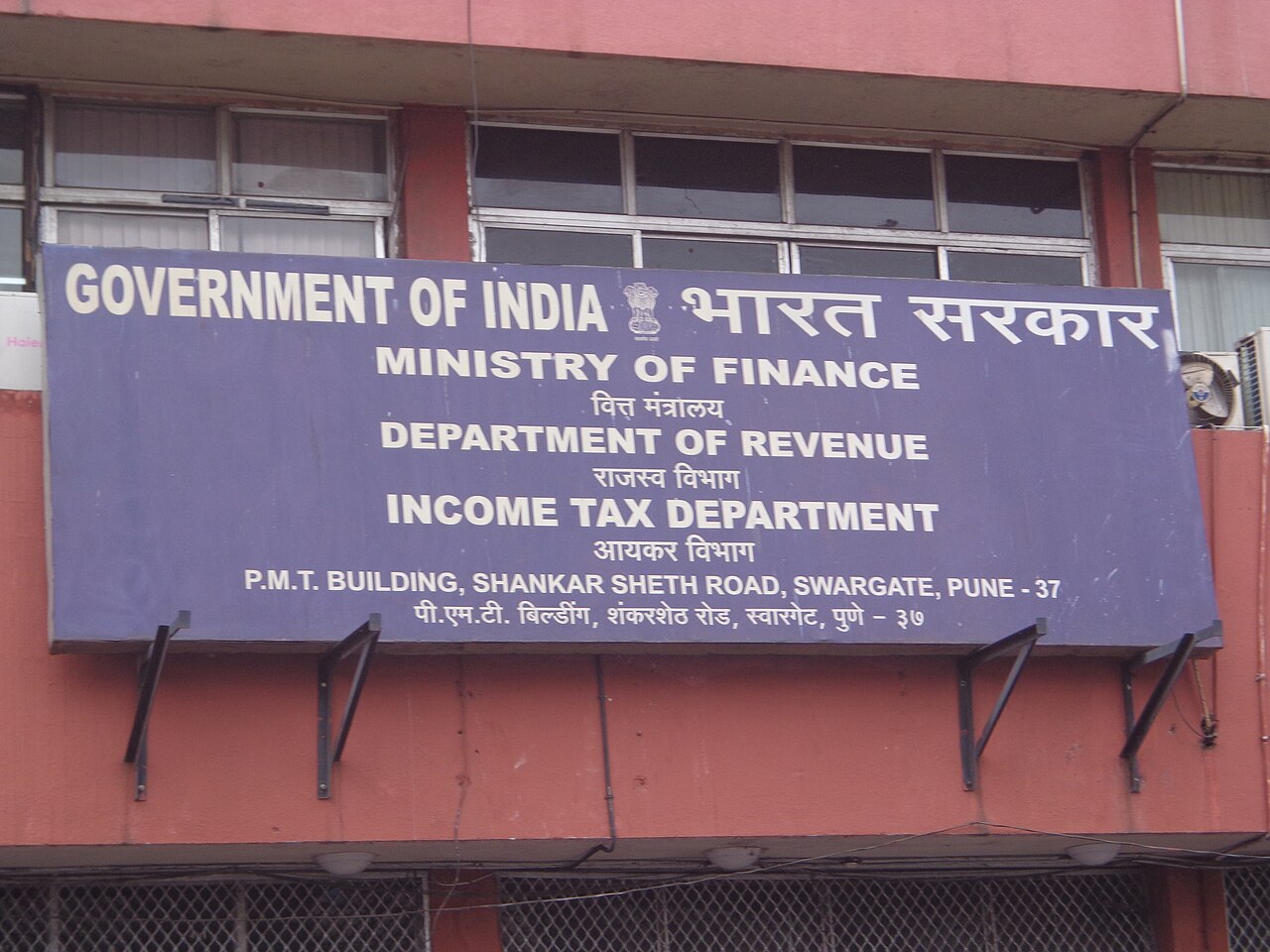
Section 201(1) of the Income-tax Act, 1961 is short and unforgiving. Where a person required to deduct tax either fails to deduct it or, having deducted it, fails to pay it, that person is deemed to be an assessee in default. The sub-section does not ask whether the payee suffered any loss, and it does not ask whether you made a profit on the transaction.
Most of these notices are generated, not investigated. The TDS wing compares the receipts reported by your vendors in Form 26AS and the Annual Information Statement against the deductions shown in your quarterly statements in Form 26Q. A gap produces a default summary on TRACES and, eventually, a show-cause notice. Nothing in that process tests your invoices.
Two limits on the power matter. First, the proviso to section 201(1) protects a deductor where the payee has taken the sum into account in its return, paid tax on it, and a chartered accountant certifies this in Form 26A. Second, section 201(3) bars an order deeming you a defaulter after seven years from the end of the financial year in which the payment was made or credit given, or after two years from the end of the financial year in which a correction statement is delivered. Read those dates before you argue anything else. The Act is on the Income Tax Department site.
The good replies are arithmetic. Section 194C covers payment for carrying out work: advertising, broadcasting, carriage of goods and passengers, catering, and manufacturing or supplying a product to a customer's specification using material purchased by the contractor. Two thresholds run together: a single payment above ₹30,000, and aggregate payments to one contractor above ₹1,00,000 in a financial year. Cross either and tax must be deducted on the whole amount, not merely on the excess. The rate is 1% for individual and HUF payees, 2% for others.
An outright sale of goods is a purchase, not a works contract. If your purchase order is for material at a negotiated price, GST is charged on the supply, delivery moves on an e-way bill, and the seller's own labour is not part of the bargain, section 194C does not reach it. Section 194Q can apply to goods purchases, but only where purchases from a single seller exceed ₹50 lakh in a year and the other conditions of that section are met. In a fabrication or job-work relationship the two legs are often billed together, and that is exactly where the department's default computation overstates the tax.
Business owners routinely argue that no single bill crossed ₹30,000. The threshold is not per bill. Once the aggregate for one payee crosses ₹1,00,000 in the year, the deduction obligation attaches. Reconcile vendor ledger by vendor ledger, not invoice by invoice.
A transporter who owns ten or fewer goods carriages and has furnished his PAN with a declaration under section 194C(6) is outside the deduction net. Payments to government and local authorities do not attract it. Payments to non-residents fall under section 195, a different provision with a different defence.
They cannot be used retrospectively, and a reply that pretends otherwise wastes the officer's patience. A certificate under section 197 belongs to the payee. The payee applies in Form 13 to its own Assessing Officer; if granted, it authorises you to deduct at a lower rate, or not at all, for payments made during the period it specifies. It operates from the date it is issued. A certificate granted in 2026 does not convert a payment made in 2023 into a non-deductible payment.
What the certificate can do is narrower and still useful. It stops further accrual for the current financial year, so the default does not grow while the old dispute is pending. It also confirms the payee's tax position, which supports your argument under the proviso to section 201(1) for the earlier years. And where penalty is proposed under section 271C, an application made promptly, with the payee's financials attached, is evidence of reasonable cause under section 273B. Do not confuse this with a section 197A declaration in Form 15G or 15H, which covers specified payments such as interest and has nothing to do with contractor bills. Form 13 is filed through the e-filing portal.
Section 201(1A) charges interest at 1% per month for failure to deduct, computed from the date on which tax was deductible to the date on which it is actually deducted, and 1.5% per month where tax was deducted but not paid. This is compensatory and the officer has no discretion to waive it, though the base and the period can be contested to the rupee.
Penalty under section 271C is a separate proceeding, requires its own show cause, and equals the tax not deducted. It is not automatic: section 273B applies where you prove reasonable cause, which is why the payee's tax payment and your reconciliation belong in the reply and not in oral submissions.
Then there is the cost inside your own assessment. Section 40(a)(ia) disallows 30% of the expenditure on which tax was not deducted, so a ₹10 lakh contractor payment can add ₹3 lakh to your taxable income even after the TDS demand is settled. The second proviso to that section gives relief where the payee has filed a return and paid tax, again on the strength of a Form 26A certificate. The statutory text is on India Code.
Read the notice for two things before anything else: which financial years it covers, and whether it attaches a payment-wise annexure. Many computer-generated notices attach nothing, and a written request for the working is a legitimate first step that also fixes the record.
Then reconcile. Take the annexure, put it side by side with the vendor ledger, and mark each entry as goods, works, professional fees under section 194J, or something outside the Act. Identify the payee's constitution, because the rate depends on it. Where a payee has already offered the income and paid tax, collect the acknowledgement of return, the computation, the relevant financials and a Form 26A certificate from a chartered accountant.
Tone decides more than length. Concede the one limb that is a genuine default, in a single sentence, and contest the rest with page-referenced exhibits. An officer who sees a disciplined table usually narrows the demand without a hearing.
A small fabrication unit in Coimbatore receives a section 201 notice for FY 2023-24, alleging failure to deduct on ₹14,30,000 paid to a private limited contractor, with tax of ₹28,600 at 2% plus interest. The reply separates the payments. ₹5,10,000 was material bought on a separate purchase order, GST charged at 18%, delivered against e-way bills, with the contractor's labour excluded. ₹9,20,000 was fabrication work on the unit's premises, squarely within section 194C, on which tax of ₹18,400 should have been deducted. A further ₹2,10,000 went to a consulting firm for design, which falls under section 194J. The contractor's return acknowledgement and Form 26A certificate show the ₹9,20,000 was offered as income and taxed. The reply concedes ₹18,400, claims the proviso to section 201(1) for it, and asks that the ₹5,10,000 goods leg and the misclassified professional fee be removed from the computation. Interest and penalty are then restricted to the admitted amount.
The notice and its annexure, with the date of service noted
A payment-wise reconciliation of the vendor ledger for each year in the notice
Purchase orders and invoices showing goods, works and professional fees separately
Form 26A certificate from a chartered accountant, with the payee's return acknowledgement
Payee PAN and constitution, to fix the 1% or 2% rate
Correction statements filed in Form 26Q, if any, with dates
A computation of tax, interest under section 201(1A) and the limitation under section 201(3)
Arguing that the payee would have paid tax anyway, without a certificate to prove it. Treating the single-payment threshold as if it were the only threshold. Filing a correction statement late and assuming it ends the default. And answering the notice orally, which leaves nothing on record when the order is passed.
The officer passes an ex parte order under section 201, treats you as an assessee in default, and issues a demand under section 156. Interest keeps running. Recovery follows the usual route, including garnishee action against your bank account. An appeal lies under section 246A within 30 days of service of the order, and section 249 allows a delay to be condoned on sufficient cause, but the appeal is decided on the record you built earlier. A stay of demand is sought under section 220(6). Genuine arithmetic errors can be corrected under section 154, which is faster than an appeal but narrower.
Start today with a written request for the payment-wise annexure and the financial years covered, and file the reconciliation with the officer within the time given in the notice. Nothing in a section 201 proceeding is decided until the record is in front of the officer.
This article is for general information only and is not legal advice. Consult a qualified professional for your specific facts.

By


0 Comments
No comments yet. Be the first to share your thoughts.
Leave a Comment